
Use AutoSum to sum numbers

 If you need to sum a column or row of numbers, let Excel do the math for you. Select a cell next to the numbers you want to sum, click AutoSum on the Home tab, press Enter, and you’re done.
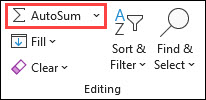
AutoSum on the Home tab

When you click AutoSum, Excel automatically enters a formula (that uses the SUM function) to sum the numbers.

Here’s an example. To add the January numbers in this Entertainment budget, select cell B7, the cell immediately below the column of numbers. Then click AutoSum. A formula appears in cell B7, and Excel highlights the cells you’re totaling.
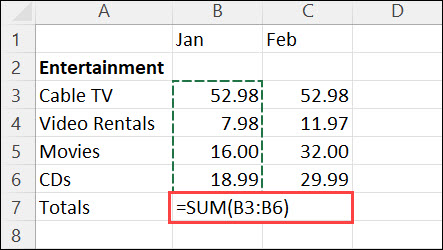
Formula created by clicking Home > AutoSum

Press Enter to display the result (95.94) in cell B7. You can also see the formula in the formula bar at the top of the Excel window.
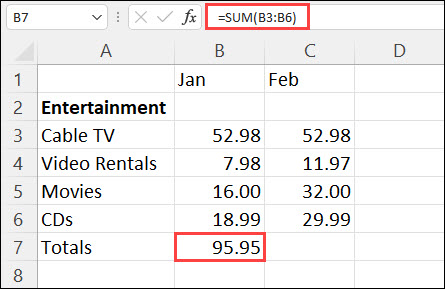
AutoSum result in cell B7

Notes: 

  • To sum a column of numbers, select the cell immediately below the last number in the column. To sum a row of numbers, select the cell immediately to the right.

  • AutoSum is in two locations: Home > AutoSum, and Formulas > AutoSum.

  • Once you create a formula, you can copy it to other cells instead of typing it over and over. For example, if you copy the formula in cell B7 to cell C7, the formula in C7 automatically adjusts to the new location and calculates the numbers in C3:C6.

  • You can also use AutoSum on more than one cell at a time. For example, you could highlight both cell B7 and C7, click AutoSum, and total both columns at the same time.

Comments

Popular posts from this blog

พยางค์

การที่เราเปล่งเสียงออกมาจากลำคอครั้งหนึ่ง ๆ นั้น เราเรียกเสียงที่เปล่งออกมาว่า “พยางค์” แม้ว่าเสียงที่เปล่งออกมาจะมีความหมายหรือไม่มีความหมายก็ตาม เช่น เราเปล่งเสียง “สุ” ถึงจะไม่ รู้ความหมาย หรือไม่รู้เรื่องเราก็เรียกว่า ๑ พยางค์ หากเราเปล่งเสียงออกมาอีกครั้งหนึ่งว่า “กร” จะ เป็น “สุกร” จึงจะมีความหมาย คำว่า “สุกร” ซึ่งเปล่งเสียง ๒ ครั้ง เราก็ถือว่ามี๒ พยางค์ เสียงที่เปล่ง ออกมาครั้งเดียวมีความหมาย เช่น นา หมายถึง ที่ปลูกข้าว เสียงที่เปล่งออกมาว่า “นา” นี้เป็น ๑ พยางค์ ลองดูตัวอย่างต่อไปนี้ ไร่ มี๑ พยางค์ ชาวไร่ มี๒ พยางค์ (ชาว-ไร่) สหกรณ์ มี๓ พยางค์ (สะ-หะ-กอน) โรงพยาบาล มี๔ พยางค์ (โรง-พะ-ยา-บาน) นักศึกษาผู้ใหญ่ มี๕ พยางค์ (นัก-สึก-สา-ผู้-ใหญ่) สหกรณ์การเกษตร มี๖ พยางค์ (สะ-หะ-กอน-การ-กะ-เสด) จากตัวอย่างข้างบนนี้สรุปได้ว่า พยางค์ คือ เสียงที่เปล่งออกมาครั้งหนึ่ง จะมีความหมายหรือไม่มีความหมายก็ตาม ถ้าเปล่ง เสียงออกมา ๑ ครั้ง ก็เรียก ๑ พยางค์ สองครั้งก็เรียก ๒ พยางค์ องค์ประกอบของพยางค์ พยางค์เกิดจากการเปล่งเสียงพยัญชนะ สระ และวรรณยุกต์ออกมาพร้อม ๆ กัน พยางค์ที่มี ความหมายอาจจะเป็นพยา...

CSS Comments

Comments are used to explain the code and may help when you edit the source code at a later date. Comments are ignored by browsers. A CSS comment is placed inside the  <style>  element, and starts with  /*  and ends with  */ : Example /* This is a single-line comment */ p  {   color :  red ; } Try it Yourself » You can add comments wherever you want in the code: Example p  {   color :  red ;    /* Set text color to red */ } Try it Yourself » Comments can also span multiple lines:  Example /* This is a multi-line comment */ p  {   color :  red ; } Try it Yourself » HTML and CSS Comments From the HTML tutorial, you learned that you can add comments to your HTML source by using the  <!--...-->  syntax. In the following example, we use a combination of HTML and CSS comments: Example < !DOCTYPE  html > < html > < head > < style > p  {   color : ...

อักษรควบ

คำควบกล้ำ ( อักษรควบ ) หมายถึง พยัญชนะสองตัวเขียนเรียงกันอยู่ต้นพยางค์ และใช้สระเดียวกัน เวลาอ่านออกเสียงกล้ำเป็นพยางค์เดียวกัน เสียงวรรณยุกต์ของพยางค์นั้นจะผันเป็นไปตามเสียงพยัญชนะตัวหน้า คำควบกล้ำ ( อักษรควบ ) มี 2 ชนิด คือ คำควบแท้ ได้แก่ พยัญชนะ ร ล ว ควบกับพยัญชนะตัวหน้า ประสมสระตัวเดียวกัน เวลาอ่านออกเสียงพยัญชนะทั้งสองตัวพร้อมกัน เช่น พยัญชนะต้นควบกับ ร ได้แก่ ครู เพราะ ครัว กรน ปรวนแปร ขรุขระ พระ ตรง ครั้ง กราบ โปรด ปรักปรำ ครื้นเครง เคร่งครัด ครอบ ปรอย กรอง พยัญชนะต้นควบกับ ล ได้แก่ เปล่า ปลีก คลาน คลุก เคล้า เปลี่ยนแปลง กลบ กลม เพลิดเพลิน เกลี้ยกล่อม เกลียวคลื่น คล่องแคล่ว เกล้า พยัญชนะต้นควบกับ ว ได้แก่ กวาด ขวาน ควาย ขวิด แคว่งคว้าง แขวน ขวนขวาย คว่ำ ควาญ แกว่งไกว ความ แคว้น ขวัญ ควัน คำควบไม่แท้ ได้แก่ พยัญชนะ ร ควบกับพยัญชนะตัวหน้าประสมสระตัวเดียวกัน เวลาอ่านไม่ออกเสียง ร ออกเสียงเฉพาะตัวหน้าหรือมิฉะนั้นก็ออกเสียง เป็นเสียงอื่นไป คำควบไม่แท้ที่ออกเสียงเฉพาะพยัญชนะตัวหน้า ได้แก่พยัญชนะ จ ซ ศ ส ควบกับ ร เช่น จริง ไซร้ เศร้า ศรี ศรัทธา สร้าง เสริม สร้อย สระ สรง สร่าง คำควบไม...